Cranky: The Hand-Drawn Font That Brings Personality to Digital Typography
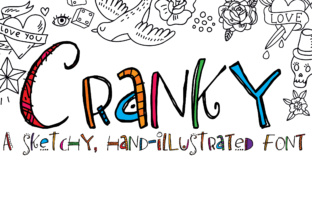
In a world where digital fonts often feel uniform and impersonal, Cranky stands out as a refreshing departure from the norm. This hand-illustrated font is more than just a typeface—it's a visual expression of creativity, spontaneity, and artistic flair. Each letter in Cranky features subtle sketches and hand-drawn decorations that give it a unique, almost handwritten quality. This makes it ideal for projects that require a personal touch, whether in branding, design, or content creation.
The appeal of Cranky lies in its ability to convey emotion and character through typography. Unlike many modern fonts that prioritize clarity and efficiency, Cranky embraces imperfection. The irregularities in each letter, the small flourishes, and the organic shapes all contribute to a sense of authenticity. This is especially valuable in an era where digital communication often feels sterile and overly polished.
Characteristics of the Cranky Font
Cranky’s design is rooted in the concept of hand-drawn illustration. Each letter is crafted with a brush or pen, resulting in a natural variation that mimics real handwriting. This means no two letters are exactly the same, which adds to the font’s charm and individuality. The font also includes decorative elements such as tiny doodles, swirls, and lines that appear subtly within each character.
One of the most striking features of Cranky is its versatility. While it may seem unconventional, it can be used in a wide range of contexts. From logos and headings to body text and social media graphics, Cranky adapts well to different formats. Its informal yet elegant style makes it suitable for both casual and professional settings, depending on how it's applied.
Another notable aspect of Cranky is its readability. Despite its hand-drawn nature, the font maintains a high level of legibility, especially at larger sizes. This makes it practical for use in signage, posters, and other visual materials where clarity is essential. However, it’s important to note that smaller text sizes may require careful consideration to ensure optimal readability.
Advantages of Using Cranky
One of the main advantages of Cranky is its ability to add personality to any project. In a digital landscape dominated by clean, geometric fonts, Cranky offers a fresh alternative that can help differentiate a brand or message. This is particularly useful for businesses or creators looking to establish a unique identity.
Cranky is also beneficial for creative professionals who want to infuse their work with a sense of artistry. Whether designing a website, creating a brochure, or developing a social media campaign, the font can serve as a powerful visual tool. Its hand-illustrated style encourages a more expressive approach to typography, allowing designers to experiment with layout, spacing, and color in new ways.
Additionally, Cranky is ideal for projects that aim to evoke nostalgia or a sense of craftsmanship. Its vintage-inspired aesthetic can transport viewers to a time when artistry and manual effort were valued. This makes it a popular choice for indie brands, artisanal products, and creative collectives that want to emphasize their handmade roots.
Use Cases for Cranky
Cranky has found a home in various industries and applications. In the realm of branding, it is often used for logos, business cards, and promotional materials. Its distinctive style helps create a memorable visual identity that stands out in a crowded market. For example, a boutique coffee shop might use Cranky in its logo to communicate a sense of warmth, creativity, and local craftsmanship.
Designers also use Cranky in editorial layouts, such as magazines, newsletters, and blog posts. Its hand-drawn elements add a playful and engaging quality to the text, making it ideal for storytelling or content that requires a more personal tone. When paired with complementary fonts and colors, Cranky can enhance the overall aesthetic of a publication while maintaining readability.
In the field of education, Cranky can be a valuable tool for teachers and students. Its informal style makes it appealing for classroom materials, presentations, and interactive learning resources. It can help make complex topics more approachable and visually interesting, encouraging engagement and participation.
Considerations When Using Cranky
While Cranky is highly versatile, there are some considerations to keep in mind when using it. One of the most important is context. The font’s informal nature may not be appropriate for all situations, especially those that require a formal or professional tone. In such cases, it may be better to pair Cranky with a more structured font to balance the design.
Another factor to consider is accessibility. Because of its hand-drawn style, some users may find it challenging to read, particularly those with visual impairments. To address this, it’s recommended to use Cranky in conjunction with clear, readable fonts for critical information. This ensures that the message remains accessible to a wider audience.
Finally, it’s important to test Cranky in different formats and environments. What works well on a screen may not translate effectively to print, and vice versa. Experimenting with size, spacing, and color can help optimize the font’s performance across various mediums.
How Cranky Stands Out in the World of Typography
Cranky distinguishes itself from other fonts by embracing the beauty of imperfection. In a world where consistency is often prioritized, Cranky celebrates the uniqueness of human expression. This makes it a compelling choice for those who value originality and creativity in their designs.
Moreover, Cranky reflects a growing trend in typography toward more personalized and expressive styles. As digital tools become more advanced, there is a renewed interest in fonts that capture the essence of human artistry. Cranky aligns with this movement, offering a typeface that feels both modern and timeless.
Ultimately, Cranky is more than just a font—it’s a statement. It challenges the conventions of digital typography and invites users to embrace the beauty of the handmade. Whether used in a commercial, creative, or educational setting, it brings a sense of warmth, character, and individuality to every project it touches.